How to Reduce Garage Doors Heat Loss: Insulation, Seals, and Thermal Breaks
Residential garages frequently represent the weakest thermal link within modern building envelopes. A standard double-wide overhead door presents roughly 150 square feet of continuous exterior surface area exposed to ambient weather conditions. How to Reduce Garage Doors Heat Loss. When uninsulated steel or wooden panels span this large portal, thermal energy moves rapidly across the barrier during extreme temperature seasons.
Attached garages share major structural walls and ceiling joists with conditioned living spaces. Cold winter air infiltrating an uninsulated garage cools adjacent interior drywalls and subfloors continuously. Consequently, central HVAC equipment operates for longer cycles to compensate for severe heat transfer along shared residential boundaries.
Achieving complete thermal envelope protection demands treating the overhead portal as an active insulation barrier. A fully optimized garage entrance combines dense core insulation, isolated metal panel skins, resilient perimeter weather seals, and tight bottom shoes. Neglecting perimeter air leaks allows convective drafts to bypass insulation panels, causing ongoing heat loss despite purchasing high-grade materials.
How to Reduce Garage Doors Heat Loss
Scope of Operational Thermal Defense
Learning how to reduce garage doors heat loss involves evaluating conductive panel transfer alongside convective draft infiltration. The phrase refers to installing core foam barriers, sealing perimeter track gaps, and isolating metal panel edges across overhead door assemblies.
Achieving lasting energy savings requires evaluating physical panel construction together with perimeter air sealing systems. Single-layer uninsulated steel doors permit rapid heat transfer, while foamed-in-place polyurethane sandwich panels slow energy movement significantly.
Common Misconceptions in Thermal Retrofitting
A frequent misunderstanding involves assuming high R-value panel kits eliminate all heat loss independently. Promotional literature often highlights center-of-panel insulation ratings calculated under ideal laboratory conditions. These figures ignore convective draft losses occurring along unsealed side jambs, top headers, and bottom floor thresholds.
Another common error involves placing reflective bubble wrap directly over raw uninsulated steel skins without creating required air dead-spaces. Reflective radiant barriers require specific air gaps to block heat radiation, providing minimal thermal value when taped flat against conductive metal.
Risks of Oversimplification
Focusing strictly on panel insulation while ignoring track weather-stripping leaves major thermal gaps intact. Installing dense foam inserts on unsealed steel tracks permits cold winter drafts to enter through wide side gaps.
Similarly, adding heavy insulation boards to lightweight door panels alters counterbalance spring tension. Heavy doors strain torsion springs, causing lift cables to slip or motor drive gears to strip during operation. Complete thermal defense requires an integrated approach combining lightweight core insulation, track weather-stripping, and spring rebalancing.
Thermodynamic Evolution of Residential Access Portals
The Shift from Single-Panel Sliders to Stamped Steel
Early 20th-century garages utilized heavy solid wood carriage doors that provided moderate natural insulation through timber density. However, raw wood panels absorbed ambient moisture over time, causing timber warping, section binding, and wide perimeter air gaps.
The post-WWII housing expansion introduced lightweight stamped steel overhead doors to lower manufacturing costs. Single-layer steel panels lowered production expenses, yet raw steel skins conducted heat rapidly, creating freezing garage interiors during winter and hot chambers during summer.
Advancements in Engineered Thermal Assemblies
During the energy crises of the 1970s, manufacturers began placing rigid polystyrene foam boards inside hollow steel panel frames. While polystyrene reduced direct conductive radiation, air gaps between foam boards and metal skins allowed continuous internal convection.
Modern thermal engineering incorporates foamed-in-place polyurethane sandwich panels with continuous thermal breaks. High-pressure polyurethane bonds outer and inner steel skins tightly, eliminating air cavities while delivering high structural strength and thermal resistance.
Conceptual Frameworks for Building Envelope Assessment
Whole-Portal Thermal Resistance Model
Evaluating energy performance requires structured analytical diagnostic models. The Whole-Portal Thermal Resistance Model measures heat loss across three functional envelope layers:
Thermal Resistance Layers
-
Core Zone: Panel insulation material density, chemical foam structure, and core thickness.
-
Interface Zone: Section joint interlock design, thermal break insertion, and internal rubber seals.
-
Perimeter Zone: Bottom threshold shoes, side jamb weather-stripping, and top header draft flaps.
Applying this analytical model prevents over-indexing on core R-values while identifying perimeter air leakage points.
Air Infiltration Resistance Index
This framework evaluates thermal performance by measuring draft airflow under dynamic wind pressure. Perimeter seal flexibility, bottom gasket alignment, and section interlocks are evaluated together to stop convective air leakage across the door frame.
Primary Thermal Mitigation Categories and Retrofit Materials
Injected Polyurethane Sandwich Assemblies
Factory-built polyurethane sandwich panels offer high thermal resistance for residential architecture. Continuous steel skins enclose a high-density polyurethane core injected under high pressure.
Polyurethane features low thermal conductivity, delivering R-values ranging from R-12 to R-19 within a two-inch panel profile. Injected foam bonds steel skins tightly, increasing panel structural rigidity while eliminating internal air circulation completely.
Expanded and Extruded Polystyrene Retrofit Kits
Polystyrene insulation kits provide affordable retrofits for uninsulated steel doors. Expanded Polystyrene (EPS) uses pre-cut rigid foam panels inserted into hollow steel section frames. Extruded Polystyrene (XPS) delivers slightly higher moisture resistance and structural foam density.
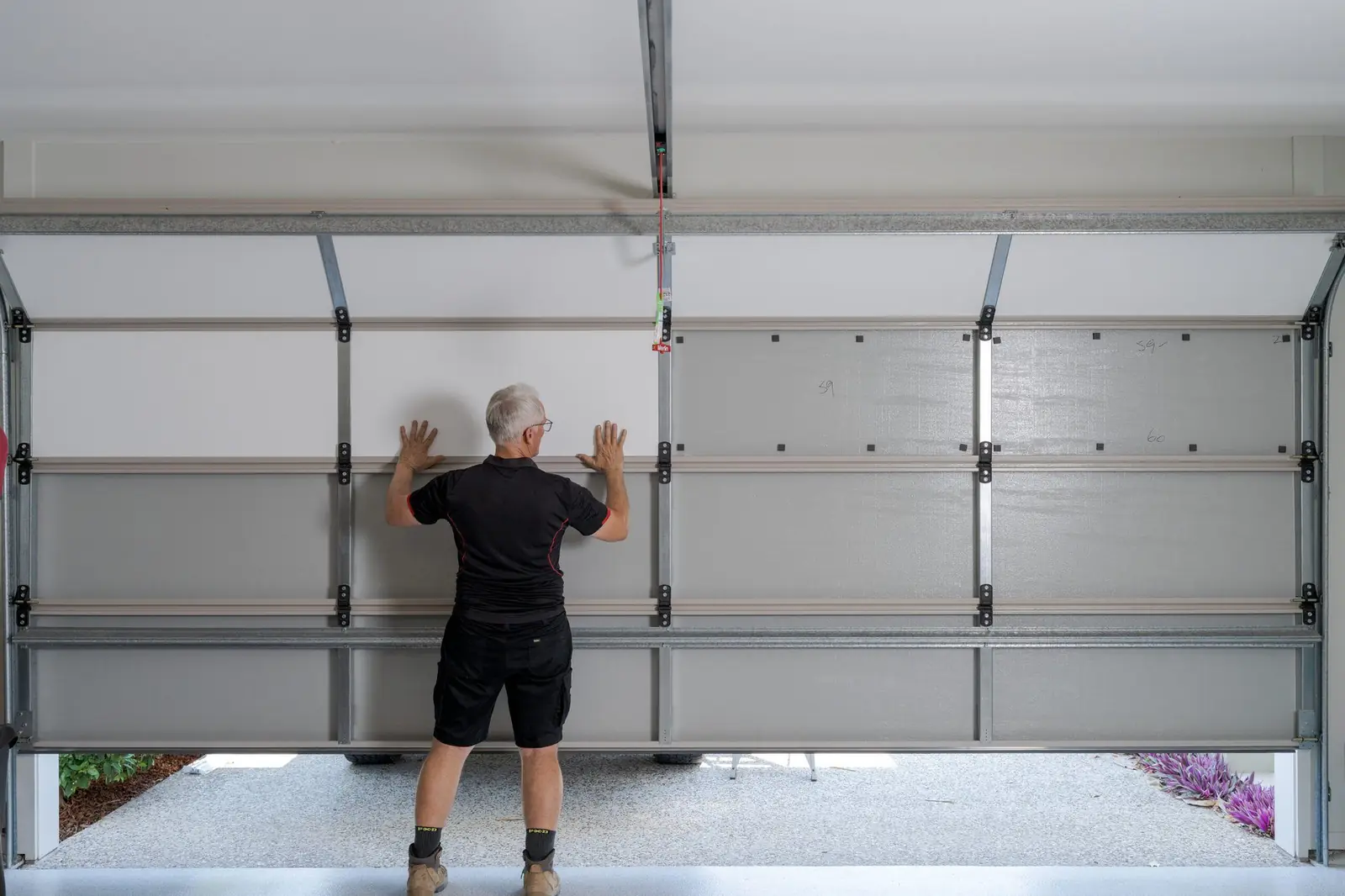
Polystyrene panels provide moderate thermal resistance ranging from R-6 to R-10. However, small air gaps between rigid foam boards and metal panel skins allow minor convective heat transfer under extreme weather conditions.
Reflective Radiant Barrier Insulation
Reflective radiant insulation utilizes aluminized foil sheets laminated to polyethylene bubble cores. Radiant barriers reflect solar radiation away from garage interiors during hot summer months.
Radiant foil kits provide light thermal protection without adding excess weight to door panels. However, reflective foils provide minimal conductive resistance during freezing winter months compared to thick polyurethane foam boards.
Comprehensive Insulation Performance Comparison Matrix
Evaluating thermal retrofit options requires comparing material parameters directly across operational energy metrics.
| Insulation Material Type | Nominal R-Value Range | Conductive Heat Block | Convective Draft Control | Added Panel Mass | Installation Complexity |
| Injected Polyurethane Sandwich | R-12 – R-19+ | Superior | Superior | High | Professional Install |
| Extruded Polystyrene (XPS) | R-8 – R-11 | High | Moderate | Medium | Moderate DIY |
| Expanded Polystyrene (EPS) | R-6 – R-9 | Moderate | Low to Moderate | Light | Easy DIY |
| Reflective Radiant Foil | R-3 – R-5 (Air Gap Needed) | Low (High Solar Reflect) | Low | Very Light | Easy DIY |
| Solid Timber Hardwood | R-3 – R-6 | Moderate | Low | Very Heavy | Professional Install |
Weather-Stripping, Perimeter Gaskets, and Seal Integration
Multi-Vane Side and Top Header Seals
Understanding how to reduce garage doors heat loss requires pairing insulated panels with durable perimeter weather-stripping. Standard vinyl seals harden and crack under solar exposure, allowing cold drafts to leak past side tracks.
High-performance installations utilize multi-vane EPDM rubber gaskets mounted on rigid aluminum retainer tracks. Dual-vane seals stay flexible across wide temperature ranges, keeping airtight contact against moving panel faces during strong wind gusts.
Adjustable Bottom Threshold Gaskets
Bottom seal shoes require flexible U-shaped EPDM rubber gaskets that conform to uneven concrete floor surfaces. Continuous threshold seals block draft entry, wind-driven rain, and winter ground cold effectively.
Installing PVC floor threshold strips directly onto concrete floors creates a solid mating surface for bottom door gaskets. Threshold strips block cold floor drafts from entering garage spaces, sealing the lower thermal boundary completely.
Real-World Architectural Retrofit Scenarios How to Reduce Garage Doors Heat Loss
Living Quarters Located Directly Above Garages
Bedrooms situated directly above attached garages experience cold floor surfaces during winter months. Uninsulated garage ceilings transfer heat outward, forcing HVAC equipment to run continuously.
Resolving floor heat loss requires installing R-16 polyurethane sandwich doors paired with multi-vane perimeter weather-stripping. Sealing top header draft gaps stops cold air from collecting beneath bedroom subfloors.
Workshops and Heated Garage Spaces
Homeowners utilizing garages as conditioned workshops require stable interior room temperatures year-round. Uninsulated metal doors allow rapid heat loss, creating high electric utility bills.
Retrofitting workshops involves installing high-density XPS foam panels combined with rubber section joint seals. Adding continuous bottom threshold gaskets keeps workshop spaces comfortable while lowering space heater power consumption.
Financial Dynamics, Energy Savings, and Material ROI
Upgrading uninsulated garage doors requires initial capital, but ongoing energy savings balance overall ownership costs. The table below outlines investment ranges across thermal retrofit options.
| Thermal Upgrade Level | Material & Component Specs | Est. Energy Loss Reduction | Est. Hardware & Install Cost ($) | Expected Service Life |
| Basic DIY Draft Seal | Vinyl Weather-Stripping & Threshold | 15% – 25% Reduction | $60 – $150 | 3–5 Years |
| Polystyrene Retrofit Kit | EPS Foam Panels + Basic Seals | 35% – 50% Reduction | $180 – $400 | 8–10 Years |
| High-R Panel Replacement | Polyurethane Sandwich Door (R-12+) | 65% – 80% Reduction | $1,500 – $3,200 | 15–20 Years |
| Full Thermal Overhaul | R-18 Door + EPDM Seals + Threshold | 80% – 95% Reduction | $3,500 – $6,500+ | 20+ Years |
Investing in insulated door panels lowers heat transfer across shared home walls, reducing annual home heating and cooling expenses.
Advanced Air Sealing Tools and Systemic Accessories
Thermal Break Polysiloxane Separators
Unbroken metal skins create severe thermal bridging pathways across door assemblies. Outer steel faces transfer cold heat directly through metal panel edges into inner steel backings, cooling garage interiors.
Continuous polysiloxane thermal breaks separate exterior and interior steel skins physically. Thermal breaks stop conductive energy from crossing panel faces, keeping inner steel backings warmer.
Snug-Fit Section Joint Interlocks
Section joint interlocks require tongue-and-groove mating profiles equipped with internal rubber gaskets. Interlocking panel edges block wind-driven drafts from passing through horizontal panel seams.
Integrated joint seals maintain airtight contact when door panels remain closed, preventing convective heat loss across panel section interfaces.
Systemic Failure Modes and Thermal Bridging Risks How to Reduce Garage Doors Heat Loss
Continuous Steel Face Bridging
Unbroken metal skins create direct thermal bridging pathways across door assemblies. Heat energy moves through outer metal faces and continuous panel edges into inner steel skins rapidly, bypassing core foam insulation.
Installing continuous polysiloxane thermal breaks isolates outer steel skins from inner metal backings, keeping heat from crossing panel faces.
Perimeter Seal Hardening and Air Leaks
Perimeter weather-stripping degrades over time due to ultraviolet radiation exposure and continuous mechanical friction. Hardened or torn jamb seals leave wide air gaps along side tracks, allowing constant draft infiltration.
Replacing cracked side seals promptly restores airtight perimeter defense, stopping high convective energy loss during extreme weather seasons.
Maintenance Governance and Long-Term Thermal Control
Sustaining thermal efficiency requires routine inspection schedules to preserve insulation cores and perimeter seals.
Annual Thermal Audit Checklist
-
Perimeter Seal Flexibility: Inspect side jamb gaskets and top header seals; replace stiff or cracked rubber components.
-
Bottom Gasket Alignment: Inspect bottom EPDM shoes for ground wear; adjust track bottom brackets to eliminate light gaps.
-
Section Joint Inspection: Check tongue-and-groove joint seals for wear or damage; replace worn internal foam strips.
-
Thermal Break Audit: Verify continuous polysiloxane thermal breaks remain intact without cracks or physical displacement.
Proactive seal maintenance prevents air draft leaks, keeping thermal efficiency high throughout the door’s service life.
Energy Metrics and Signal Monitoring Protocols
Evaluating thermal performance involves tracking key physical and environmental indicators.
Leading vs. Lagging Performance Metrics
Leading indicators reveal potential thermal leaks before energy bills increase. Drafts along side tracks, hardened perimeter rubber, and minor condensation spots signal seal degradation that lowers efficiency.
Lagging indicators appear after thermal breaches occur. High utility bills, large frost build-ups inside panel seams, and sudden temperature drops in rooms above the garage confirm severe insulation failure. Monitoring these indicators regularly helps homeowners correct thermal gaps before major energy losses occur.
Common Misconceptions and Retrofit Oversimplifications
Myth 1: Core Foam R-Value Guarantees Complete Efficiency
Many homeowners believe buying high R-value foam panels guarantees maximum energy savings, ignoring installation quality completely. High-density panels perform poorly if wide air gaps exist along side tracks or top header seals. Maximum energy performance demands matching high R-value panels with airtight perimeter weather-stripping.
Myth 2: Insulating Detached Garages Yields Equal Home Savings
Assuming insulating doors delivers equal HVAC savings on detached garages is a common oversimplification. Unheated detached garages lack direct wall boundaries with residential living areas. Insulating detached garage doors stabilizes internal temperatures for stored vehicles, but offers minimal direct impact on main home utility bills.
Strategic Synthesis for Building Thermal Efficiency
Understanding how to reduce garage doors heat loss requires combining dense insulation materials, thermal breaks, and airtight perimeter seals. Treating the overhead garage portal as an integrated thermal barrier preserves home energy comfort and lowers monthly utility expenses.
System Specification Verification Checklist
-
[ ] Insulation Material: Select high-density foamed-in-place polyurethane sandwich panels (R-12 to R-19+).
-
[ ] Thermal Isolation: Verify continuous polysiloxane thermal breaks separate exterior and interior steel skins.
-
[ ] Perimeter Seals: Install heavy dual-vane EPDM jamb seals mounted on rigid aluminum retainers.
-
[ ] Bottom Threshold Shoe: Fit heavy U-shaped EPDM rubber gaskets that adjust to concrete floor contours.
-
[ ] Section Joint Seals: Choose tongue-and-groove section joints with integrated internal rubber gaskets.
-
[ ] Spring Rebalancing: Have trained technicians test and adjust torsion spring tension after adding retrofit insulation panels.
Systematic material selection, proper perimeter air sealing, and routine gasket maintenance convert large garage portals into strong thermal defense barriers for modern homes.