Best Garage Doors for Noise Reduction: Acoustic Isolation, Material Density, and Mechanical Damping
Acoustic management within modern residential structures presents complex engineering challenges. The garage door represents the largest single wall opening in most residential floor plans. Best Garage Doors for Noise Reduction. Thin metal skins and unsealed frame perimeters permit sound waves to pass freely between outdoor driveways and interior living spaces. Urban traffic noise, lawn equipment, and late-night mechanical operation penetrate weak door boundaries continuously.
Architects evaluate garage acoustical performance when designing attached living areas. Placing bedrooms, nurseries, or home offices directly above or beside garage bays changes design priorities. Mechanical vibration generated by unisolated tracks transfers directly into structural ceiling joists. Structural resonance amplifies low-frequency motor hums throughout wood-framed house envelopes.
Achieving acoustic isolation requires addressing both airborne sound transmission and structural vibration. Selecting dense foam core panels, nylon ball-bearing rollers, flexible perimeter seals, and direct-drive operators isolates mechanical motion. Evaluating structural acoustic solutions protects interior room comfort across demanding residential environments.
Understanding “Best Garage Doors for Noise Reduction”
Distinguishing Airborne Sound from Structural Vibration
Identifying the best garage doors for noise reduction requires analyzing acoustic physics. Sound enters living spaces through two distinct physical pathways: airborne noise and structure-borne vibration. Airborne sound consists of pressure waves traveling through air gaps around unsealed door perimeters. Structural vibration occurs when mechanical hardware vibrates against wall studs and floor joists during door travel.
Uninsulated single-skin steel panels act like large acoustic drums, echoing operational noises across interior bays. Installing dense sandwich panels dampens surface resonance effectively. Isolating mechanical track brackets with rubber vibration mounts stops kinetic energy from entering structural framing.
Acoustic Rating Metrics in Residential Doors
Engineers measure acoustic performance using specific standard testing metrics:
-
Sound Transmission Class (STC): A numerical rating evaluating how effectively a structural partition blocks airborne sound transmission. Higher STC values indicate superior acoustic sound blocking across human speech frequencies.
-
Outdoor-Indoor Transmission Class (OITC): A rating measuring sound attenuation against low-frequency outdoor noise sources such as highway traffic, aircraft overflights, and heavy machinery.
Deep Contextual Background
Historical Evolution of Residential Garage Acoustics
Mid-twentieth-century garage construction prioritized basic vehicle shelter over noise control. Detached single-car sheds kept mechanical operational noise far from primary living quarters. Single-sheet steel tilt-up doors operated with loud extension springs and unlubricated metal rollers.
Suburban architectural designs eventually attached garages directly to house frames. Finishing bonus rooms over garage bays created severe noise conflicts. Chain-drive electric openers mounted directly to open floor joists, shaking bedroom floors whenever doors operated. Rising home density forced manufacturers to engineer sound-dampening door systems.
Modern Acoustic Engineering Innovations
Late twentieth-century manufacturing introduced steel sandwich construction using injected polyurethane foam. Densely packed foam bonded tightly to inner steel skins, reducing panel flutter and lowering sound transmission rates.
Contemporary hardware designs substitute noisy steel rollers with sealed nylon-coated ball bearings. Rubber isolation hangers replace rigid metal ceiling straps, interrupting dynamic kinetic pathways before sound enters house framing.
Conceptual Frameworks and Mental Models
The Mass-Air-Mass Acoustic Boundary Model
This acoustic model treats insulated garage doors as multi-layered mass barriers. High-density polyurethane foam sandwiched between heavy steel skins creates alternating mass-damping layers. Disrupted sound waves lose kinetic energy as they pass across dense material transitions. Applying this framework highlights why thick sandwich panels block outdoor street noise far better than thin single-skin doors.
The Kinetic Path Decoupling Framework
This engineering model maps dynamic mechanical energy transfers from moving hardware into building frames. Opener motors, steel rollers, and metal tracks generate physical kinetic vibrations during operation. Decoupling tracks using rubber isolation grommets interrupts structural sound pathways. Isolating hardware hardware stops structural framing from acting as an acoustic speaker cone.
The Acoustic Flanking Leakage Hierarchy
This evaluation model prioritizes sound leakage paths based on gap sizes and perimeter seals:
-
Primary Air Gaps: Open spaces beneath unsealed bottom astragals allow unimpeded airborne noise penetration.
-
Perimeter Edge Seals: Gaps along vertical side jambs transmit high-frequency ambient street noise.
-
Panel Joint Interfaces: Unsealed tongue-and-groove section joints permit sound leakage across door faces.
-
Structural Core Transmission: Sound waves passing directly through solid panel materials.
Key Categories and System Variations
Polyurethane-Injected Triple-Layer Sandwich Doors
Polyurethane sandwich doors feature high-density foam injected under pressure between two heavy steel skins. Injected foam bonds tightly to interior metal surfaces, creating a solid composite panel. These doors deliver exceptional STC ratings, high structural rigidity, and superior thermal insulation performance.
Expanded Polystyrene (EPS) Double-Layer Doors
Polystyrene doors incorporate rigid foam boards glued against exterior steel panel backs. Exposed foam faces the interior garage space, offering moderate acoustic damping at lower price points. However, unbonded EPS boards absorb less acoustic energy than pressure-injected polyurethane cores.
Heavy Custom Hardwood Sectional Doors
Custom solid wood doors utilize dense cedar, mahogany, or oak framing to block airborne sound waves naturally. High material mass provides high natural acoustic attenuation. However, wood panels absorb moisture, require continuous sealant maintenance, and add dead weight to opening hardware.
Full-View Insulated Glass Aluminum Doors
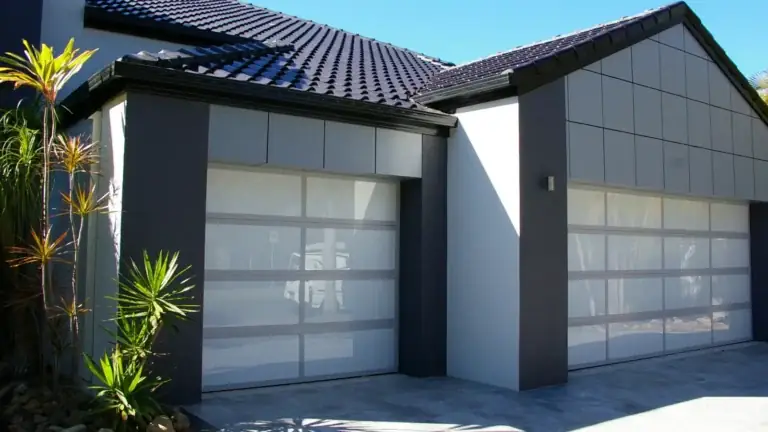
Glass doors feature extruded aluminum grid frames holding double-pane tempered insulated glass panels. Dual-pane glass filled with argon gas offers moderate acoustic damping while providing modern visual appeal. Uninsulated glass frames transmit higher mechanical vibration than foam-filled steel panels.
Side-Sliding Horizontal Sectional Doors
Side-sliding doors travel horizontally along curved tracks adjacent to interior side walls. Eliminating overhead ceiling tracks stops direct sound transmission into bedrooms located overhead. However, side-sliding paths consume interior wall storage space.
System Noise Reduction Comparison
| Door System Type | Airborne Sound Blocking (STC Rating) | Mechanical Vibration Level | Maintenance Needs | Relative Cost Index | Structural Mass Density |
| Polyurethane Triple-Layer | High (STC 26 – 30) | Very Low | Low | High | Heavy |
| Polystyrene Double-Layer | Moderate (STC 20 – 24) | Moderate | Low | Moderate | Medium |
| Custom Solid Hardwood | Superior (STC 28 – 32) | Low | High | Very High | Heavy |
| Insulated Glass Aluminum | Moderate (STC 22 – 25) | Moderate | Low | High | Medium |
| Side-Sliding Sectional | Moderate (STC 24 – 27) | Low (No Overhead Drop) | Moderate | High | Heavy |
Acoustic Selection Logic
Selecting suitable door configurations depends on room placement, budget limits, and environmental sound levels:
-
Scenario A (Living Space Located Directly Overhead): Specify Polyurethane Injected Triple-Layer with Nylon Rollers and Belt-Drive DC Motor.
-
Scenario B (Attached Home Office / Recording Studio): Specify Polyurethane Triple-Layer or Custom Solid Hardwood with Wall-Mount Opener.
-
Scenario C (Detached Workshop / Storage Garage): Specify Polystyrene Double-Layer or Standard Sectional Door.
-
Scenario D (High-Traffic Urban Boulevard Elevation): Specify High-Density Polyurethane Sandwich Door with Perimeter Acoustic Seals.
Detailed Real-World Scenarios Best Garage Doors for Noise Reduction
Bedrooms Situated Directly Overhead
Living space layouts often position master bedrooms directly above double-car garage doors. Early morning vehicle departures trigger mechanical track vibration, waking sleeping occupants overhead. Uninsulated steel panels amplify motor gear hums through open ceiling floor joists.
Installing a polyurethane sandwich door equipped with nylon ball-bearing rollers eliminates track friction. Belt-drive operators using DC motors start and stop gradually, eliminating sudden mechanical jerks. Rubber isolation mounts isolate track hangers, keeping bedroom floors quiet during door operation.
Home Recording Studios and Music Spaces
Homeowners frequently convert garage bays into active music practice rooms, pod-casting studios, or media spaces. High internal sound levels penetrate thin door panels, creating neighbor noise complaints. External traffic sound leaks inward, ruining delicate audio recordings.
High-R-value polyurethane doors act as dense acoustic barriers, blocking airborne sound transmission. Installing heavy EPDM perimeter seals closes edge gaps around side jambs and top headers. Double-drop bottom astragal seals close threshold gaps tightly against concrete slabs.
High-Density Urban Alleyway Elevations
Residences located along narrow urban alleyways experience loud sound reflections from adjacent brick walls. Passing garbage trucks, delivery vans, and night traffic bounce sound directly against garage doors.
Specifying high-STC polyurethane sandwich doors blocks ambient urban noise effectively. Continuous vinyl perimeter seals stop high-frequency air drafts from carrying street sound into interior garage workshops. Solid panel cores deaden panel flex caused by passing vehicle exhaust rumbles.
Planning, Cost, and Resource Dynamics
Financial Planning for Quiet Door Systems
Achieving maximum garage noise reduction requires balancing panel investments against hardware isolation costs. High-density sandwich panels carry higher upfront material prices, but dense foam construction provides acoustic isolation, thermal energy savings, and dent resistance over decades.
Investing in nylon-coated ball-bearing rollers and ultra-quiet openers increases initial spending slightly. However, quiet mechanical hardware lowers wear rates, extends spring lifespans, and prevents expensive framing acoustic retrofits later.
Cost and Acoustic Performance Ranges
| Performance System Tier | Material Equipment Range | Hardware & Opener Upgrades | Total System Investment | Airborne Sound Rating |
| Basic Damped System | $1,200 – $1,800 | $300 – $500 | $1,500 – $2,300 | STC 20 – 22 |
| Mid-Range Quiet System | $2,000 – $3,500 | $500 – $900 | $2,500 – $4,400 | STC 24 – 27 |
| Premium Acoustic System | $3,500 – $6,500 | $900 – $1,600 | $4,400 – $8,100 | STC 28 – 32 |
| Custom Studio-Grade System | $6,500 – $12,000+ | $1,500 – $3,000 | $8,000 – $15,000+ | STC 32+ |
Tools, Strategies, and Support Systems
Essential Equipment for Acoustic Optimization
Achieving low operating noise relies on specific hardware components and isolation accessories:
Nylon-Coated Ball-Bearing Rollers
Commercial-grade nylon rollers cushion wheel travel inside steel tracks, eliminating harsh metal-on-metal grinding sounds.
DC-Powered Belt-Drive Motors
Rubber belt openers driven by variable-speed DC motors run smoothly, eliminating loud chain drive clatter.
Wall-Mounted Direct-Drive Shaft Motors
Side-mount openers mount beside torsion shafts, driving doors directly while removing noisy central ceiling tracks.
Rubber Track Isolation Hangers
Neoprene vibration mounts isolate ceiling track straps, preventing kinetic energy transfers into floor joists.
Heavy-Duty EPDM Bottom Astragal Seals
Flexible rubber bottom seals compress tightly against slab surfaces, closing airborne sound gaps beneath doors.
High-Cycle Precision Torsion Springs
Accurately balanced torsion springs lift heavy sandwich doors effortlessly, lowering opener gear motor loads.
Risk Landscape and Failure Modes Best Garage Doors for Noise Reduction
Primary Acoustic Failure Pathways
Omitting isolation hardware or choosing thin panel materials introduces noise transmission pathways:
Structural Framing Resonance
Mounting metal track hangers directly to exposed ceiling joists transforms house framing into an acoustic soundboard. Motor vibrations travel across wooden floor joists, shaking bedroom drywall panels overhead.
Perimeter Air Gaps
Unsealed side jambs or worn bottom seals allow airborne sound waves to bypass heavy insulated panels entirely. Small perimeter gaps degrade overall door STC ratings rapidly.
Acoustic Breakdown Factors
-
Worn Steel Roller Bearings: Unlubricated metal rollers squeal inside tracks, generating loud high-frequency noise.
-
Unbalanced Torsion Springs: Under-tensioned springs force opener motors to drag heavy panels, causing gear whine.
-
Loose Track Brackets: Vibrating track bolts rattle against wall studs during fast door travel cycles.
Governance, Maintenance, and Long-Term Adaptation
System Maintenance Protocols
Maintaining quiet door operation requires regular hardware lubrication and alignment schedules:
Quarterly Mechanical Checks
-
Lubricate steel hinges, roller stems, and torsion springs with silicone spray.
-
Inspect side perimeter seals for stiffening, cracking, or edge gaps.
-
Test safety auto-reverse features using a solid block obstacle.
Bi-Annual Hardware Tuning
-
Check track mounting bolts for loose hardware or frame misalignment.
-
Clean vertical track channels using a degreaser to remove grimy debris.
-
Verify manual door balance by disconnecting opener trolley levers.
Measurement, Tracking, and Evaluation
Acoustic Performance Signals
Evaluating noise reduction involves monitoring operational sound levels and mechanical vibration:
Leading Acoustic Signals
-
Decibel Level Readings: Sound meters measuring operating noise below 55 dB indicate quiet drive performance.
-
Smooth Travel Cycles: Jerk-free panel movement signals accurate spring counterbalancing and track alignment.
-
Flexibility of Edge Seals: Soft rubber seals confirm tight perimeter protection against airborne noise.
Lagging Acoustic Signals
-
Structural Floor Shaking: Vibrations felt in rooms overhead point to worn isolation grommets or loose hangers.
-
High-Frequency Metal Squeals: Loud track noises signal dry roller bearings or misaligned vertical tracks.
-
Motor Gear Grind Sounds: Stripping opener gears indicate heavy panel drag caused by broken torsion springs.
Common Misconceptions and Oversimplifications
“R-Value Guarantees Noise Reduction”
Thermal insulation R-value measures heat flow resistance, not sound blocking. Polyurethane foam dampens noise effectively due to structural density, but air gaps around door edges ruin acoustic performance regardless of R-value ratings.
“Belt-Drive Openers Solve All Noise Problems”
Belt-drive motors reduce opener chain clatter significantly. However, if door rollers are worn steel or track brackets mount directly to ceiling joists, mechanical track vibrations will still resonate through house framing.
“Adding Foam Boards to Old Doors Is Sufficient”
Gluing aftermarket foam boards onto light single-skin steel doors adds uncontrolled dead weight. Legacy torsion springs cannot lift extra panel weight safely, straining opener motors and increasing mechanical noise.
Ethical, Practical, and Architectural Considerations
Balancing Architectural Style and Acoustic Science
Garage doors represent prominent visual features on residential facades. Achieving noise reduction requires integrating acoustic performance with building architecture:
Architects use specific strategies to blend quiet garage doors into residential home designs:
-
Matching Facade Cladding Colors: Painting dense sandwich doors to match main wall tones unifies large building elevations.
-
Insulated Dual-Pane Window Inserts: Specifying dual-pane insulated glass inserts retains natural interior lighting without sacrificing acoustic sound blocking.
-
Recessed Wall Frame Reveals: Recessing door frames behind masonry overhangs creates shadow lines, reducing exterior street noise bounce.
Conclusion
Determining the best garage doors for noise reduction requires an integrated strategy addressing airborne sound isolation and structural vibration control. Treating garage doors as complete dynamic acoustic systems protects interior living spaces from intrusive neighborhood noise and mechanical operating sounds.
Specifying dense polyurethane sandwich panels, nylon ball-bearing rollers, rubber isolation mounts, and ultra-quiet belt-drive motors creates quiet residential openings. Careful detail planning, professional hardware alignment, and routine maintenance deliver smooth door