Best Garage Doors for Home Security: Materials, Hardware, and Access Control Guide
Garage doors represent the largest moving structural component of any residential building. Homeowners frequently invest significant capital in solid-core front entry doors, smart deadbolts, and multi-pane impact windows while leaving the garage portal minimally protected. An unreinforced or poorly specified garage door acts as a primary point of structural vulnerability. Best Garage Doors for Home Security. Criminal entry through a garage provides immediate access to vehicle storage, direct pathways into living quarters, and sheltered environments where intruders can operate away from public visibility.
Securing this entry point demands an integrated system approach rather than a single component purchase. A garage door system consists of the panel envelope, side tracks, roller assemblies, torsion or extension springs, structural jambs, lock mechanisms, and automated openers. Weakness in any single component compromises the defensive capacity of the entire assembly. For example, a heavy steel door panel mounted on light-gauge aluminum tracks secured to unreinforced wooden framing yields minimal protection under sustained mechanical force.
Modern perimeter security strategy treats the garage door as a load-bearing barrier against forced entry, weather impacts, and compromise attempts. Selecting an effective door configuration requires balancing structural rigidity, operational reliability, material durability, and digital access controls. Achieving optimal residential protection requires understanding how materials, mechanical systems, and access protocols interact under physical stress.
Understanding Best Garage Doors for Home Security
Scope and Multifaceted Security Architecture
Finding the best garage doors for home security involves evaluating multiple engineering parameters simultaneously. The phrase refers not to a single off-the-shelf product, but to an assembled system engineered to resist specific threat vectors. Physical resistance to prying, impact, dynamic strain, and electronic bypass defines systemic quality.
Understanding this system requires looking beyond simple aesthetic choices or superficial strength claims. A fully secured installation integrates physical structural integrity with automated locking mechanisms.
Common Misconceptions Regarding Garage Security
A frequent misunderstanding is equating thick appearance with true physical security. Many basic residential doors feature decorative exterior cladding over hollow cores or light foam insulation. These assemblies buckle easily under targeted hydraulic lever attacks or concentrated impacts.
Another common error involves relying entirely on the automated opener’s motor to keep the door shut. Standard overhead openers use plastic gear assemblies and lifting arms designed primarily for counterbalance movement, not forced-entry resistance. Without dedicated automatic deadbolts or track-engagement pins, leverage applied to the bottom panel can compromise standard openers.
Pitfalls of Oversimplification
Focusing on a single feature while ignoring structural integration creates a false sense of protection. Installing a high-security lock on a door made of thin 27-gauge steel allows intruders to cut or bend the panels around the lock.
Similarly, buying heavy-gauge steel panels without upgrading the tracking hardware can lead to mechanical failure. Heavy panels can pull light-gauge tracks out of wooden studs during a forced entry attempt. Security must be understood as an interconnected chain of equal structural resistance.
Historical Evolution of Garage Entry Vulnerabilities
The Transition from Carriage Houses to Attached Garages
Early 20th-century garages evolved from detached carriage houses located far from the main residential structure. These buildings featured heavy timber double-swing doors secured with manual iron drop-bars. Intruders gaining access to a detached carriage house remained separated from the home’s living areas.
Post-WWII suburban development shifted building designs toward attached garages for convenience. This shift moved the large garage entry directly into the home’s primary security perimeter. However, door manufacturing shifted toward lightweight stamped aluminum and thin fiberglass panels to lower costs and ease manual lifting.
Technological Advancement and New Attack Vectors
The introduction of residential automated openers in the late 1950s altered home entry dynamics. Early systems operated on fixed radio frequencies, allowing unauthorized users to open doors using basic signal grabbers. Manufacturers responded by developing rolling-code encryption techniques to block RF code replay attacks.
As digital encryption strengthened, manual attack techniques adapted. Intruders developed tactics to push wire through top weather seals to pull internal emergency release ropes. Modern high-security garage doors prevent this by using shielded carriage mechanisms and automatic lock synchronization.
Structural Frameworks for Evaluating Door Resistance
The Perimeter Defense In-Depth Framework
Evaluating the security of a garage portal requires structured analytical frameworks. The Defense-in-Depth model organizes defensive barriers into layered zones.
Defense Layers
-
Outer Layer: Physical panel composition, impact resistance, and structural rigidity.
-
Intermediate Layer: Track gauge, mounting hardware, roller construction, and wall anchorage.
-
Inner Layer: Motor engagement, automated deadbolts, carriage shielding, and electronic sensor monitoring.
Applying this framework prevents over-indexing on single defensive elements while revealing structural gaps across the system.
Force Vectors and Strain Analysis Framework
This analytical framework evaluates structural integrity by mapping external mechanical forces to specific components during compromise attempts. Dynamic impacts target the outer steel skin and polyurethane core. Pry attacks strain the bottom panel and track anchor studs. Torsion pulls stress the opener arm and carriage release mechanism. Analyzing these force vectors helps engineers design door assemblies that distribute stress evenly, preventing isolated mechanical points of failure.
Primary Material and Construction Categories
Multi-Layer Steel Constructions
Steel garage doors configured for elevated security utilize multi-layer sandwich construction. These panels feature outer steel skins enclosing a solid core of injected dense polyurethane insulation bonded directly to the metal walls.
Steel thickness is measured by gauge; lower numbers represent thicker material. Standard doors use thin 25- to 27-gauge steel, which buckles easily under physical impact. High-security applications require heavy 24-, 22-, or 20-gauge hot-dipped galvanized steel with exterior composite overlays. Steel panels resist cutting, impacts, and environmental weathering. However, high-gauge steel increases total system weight, requiring heavy-duty spring assemblies and reinforced tracking components.
Solid Extruded Aluminum Systems
Extruded aluminum doors differ significantly from cheap, thin stamped aluminum models. Heavy aluminum extrusions form solid structural frames that hold reinforced solid core panels or impact-rated glass.
Extruded aluminum offers high strength-to-weight performance and strong corrosion resistance in coastal salt-air environments. However, aluminum yields lower ultimate yield strength under direct dynamic impacts compared to heavy-gauge structural steel.
Heavy Solid Hardwood Formations
Solid hardwood doors crafted from dense species like Mahogany, Teak, or Ipe provide substantial physical mass and high resistance to brute force. Carved solid hardwood panels resist heavy impacts and drilling attempts better than thin metal skins. However, wood requires ongoing seal upkeep to prevent moisture absorption, warping, or rotting that could misalign locking hardware.
Reinforced Composite and Fiberglass Layers
Fiberglass and vinyl doors are built over steel sub-frames to handle harsh weather conditions. Fiberglass skin resists denting and salt spray corrosion. However, without an internal steel frame and dense core, thin fiberglass can shatter under concentrated sledgehammer impacts.
Comparative Analysis of Door System Types
Evaluating system specifications requires direct side-by-side comparison across structural parameters.
Real-World Security Scenarios and Threat Vectors Best Garage Doors for Home Security
Urban Residential Driveways with Public Alley Access
Properties with alley access face higher risks of targeted break-ins due to limited public visibility and quick escape routes. In this setup, intruders frequently use pry bars along the top panel to reach internal emergency release mechanisms. Effective protection requires 20-gauge steel panel construction, side-track shields, automated deadbolts, and opaque top panels without glass.
Coastal High-Wind and Corrosive Salt Spray Zones
Coastal homes require garage security systems built for severe storms and salt spray corrosion. Rust degrades standard locking mechanisms and weakens steel tracks, making doors easier to force open. Optimal designs use anodized extruded aluminum or stainless-steel hardware, paired with wind-load reinforced tracks anchored into masonry walls.
Suburban Properties with Concealed Entry Points
Suburban homes with long driveways or hidden side-loading garages give intruders time to use loud, aggressive entry methods. Intruders may use sledgehammers or vehicle jacks to break through lower panels. Protecting these areas requires solid polyurethane cores bonded to double steel skins, heavy-duty commercial bottom tracks, and integrated alarm sensors.
Financial Dynamics, Installation Costs, and Value Realization
Investing in residential physical security involves both upfront costs and long-term ownership value. The table below outlines typical investment ranges for high-security garage door installations.
Evaluating long-term financial return involves factoring in potential insurance premium reductions, reduced maintenance expenses, and preserved property value. Standard doors feature low upfront costs but suffer from frequent repairs and higher risk exposure. High-security doors require larger initial capital but offer lower long-term maintenance and risk mitigation.
Integration of Hardware, Automation, and Support Systems
Selecting high-quality garage doors for home security requires combining solid structural panels with commercial-grade mounting hardware. Standard residential installations often use light 14- or 16-gauge track metal held by short screws. Under force, light tracks bend outward, allowing panel rollers to pop out of their guides.
High-security systems use 12-gauge continuous steel tracks bolted into solid framing studs using heavy lag screws. Rollers should feature 10-ball-bearing hardened steel wheels or heavy nylon tires wrapped around solid steel shafts to resist dynamic impact.
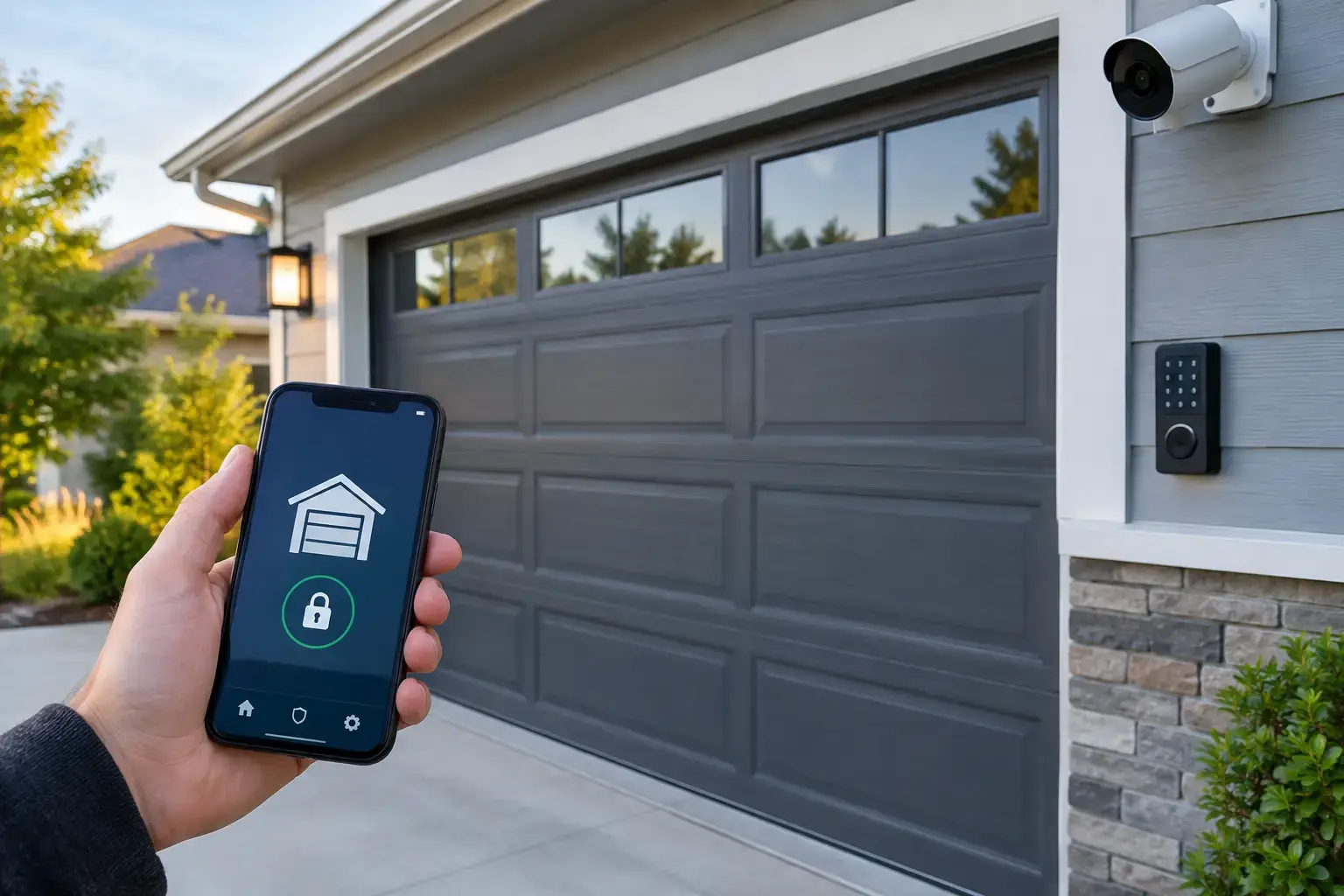
Automated openers must include synchronized power deadbolts. These locks automatically drive solid steel pins through the side tracks whenever the door closes, preventing manual prying. Smart opener systems send immediate alerts to smartphones if manual tampering forces open the door envelope. Combining physical steel track deadbolts with digital access monitoring ensures comprehensive entry security.
Threat Landscapes and Mechanical Failure Modes
Manual Lever Attacks
Manual lever attacks use prying tools inserted into horizontal panel joints to force open sectional garage doors. Standard hollow steel panels bend under lever pressure, popping hinges out of their tracks. Multi-layer sandwich panels resist bending, keeping the panel joints interlocked under high lever force.
Impact and Structural Buckling
Dynamic impact attacks involve hitting panel centers with high force to push rollers out of side tracks. Reinforcing doors with horizontal steel U-bars across every panel section increases lateral strength, preventing track disengagement during impact.
Carriage Disengagement Interception
Intruders can bypass automatic openers by pushing flexible tools through the top weather seal to pull the manual emergency release cord. Installing metal carriage shields, removing hanging cord handles, or fitting anti-break-in top bracket guards blocks tool access to the release mechanism.
Maintenance Protocols and Operational Governance
Maintaining long-term security requires regular inspection schedules to keep mechanical parts functioning correctly.
Security Inspection Cycles
-
Monthly Balance Checks: Disengage opener; open door manually halfway. If panel drops or rises, spring tension needs adjustment.
-
Quarterly Hardware Tightening: Inspect lag bolts along track brackets, hinge fastenings, and roller carrier plates; tighten loose hardware.
-
Bi-Annual Lock Inspections: Test automatic track deadbolts to confirm locking pins fully enter side tracks without binding.
-
Annual Professional Servicing: Have certified technicians test high-tension torsion springs, balance cables, and wall mounting plates.
Addressing mechanical wear early prevents system jams and ensures maximum physical resistance during forced entry attempts.
Performance Metrics and Monitoring Indicators
Monitoring system performance involves tracking both physical and digital security signals.
Leading vs. Lagging Indicators
Leading indicators reveal potential mechanical vulnerabilities before system failure occurs. For example, increased noise during opening indicates bearing wear or track misalignment, which lowers resistance to physical impacts. Track play and panel seam sagging also signal impending failure.
Lagging indicators document security events after an attack attempt. Scratches near top panel seams suggest leverage testing, while opener motor error logs may point to unauthorized manual lifting attempts. Sensor interruption alarms provide immediate post-event data.
Tracking these indicators helps homeowners make timely repairs, maintaining high security across all garage access points.
Fallacies, Misconceptions, and Design Oversimplifications Best Garage Doors for Home Security
Myth 1: Heavy Openers Replace Solid Locking Hardware
Many homeowners believe installing a heavy 1.25-HP garage door motor eliminates the need for separate physical locks. Opener motors push panels downward, but standard trolley gears give way under steady pry pressure. Solid physical security requires mechanical track locks or automated deadbolts.
Myth 2: Glass Windows Always Compromise Door Security
Homeowners often avoid top-panel windows, believing glass automatically ruins door security. Standard glass breaks easily, but installing impact-rated laminated polycarbonate windows preserves natural lighting while providing high impact resistance.
Ethical, Aesthetic, and Neighborhood Contexts
High-security garage doors must balance strong protection with neighborhood aesthetics and community design standards. Modern manufacturing builds 20-gauge steel and insulated cores behind decorative composite wood overlays. This combination meets strict Homeowners Association (HOA) design rules while providing robust physical protection against forced entry.
System Synthesis and Long-Term Strategic Planning
Choosing the best garage doors for home security requires integrating heavy structural materials, solid mounting hardware, and reliable digital access controls. Treating the installation as an interconnected defense system ensures long-term home protection.
Comprehensive System Checklist
-
[ ] Panel Integrity: Select 20- to 24-gauge steel or solid extruded aluminum with injected polyurethane cores.
-
[ ] Track Anchorage: Install 12-gauge steel tracks secured to wall studs using heavy-duty lag bolts.
-
[ ] Hardware Quality: Use 10-ball-bearing steel rollers and heavy commercial hinges across all joints.
-
[ ] Integrated Locking: Install automated side-track deadbolts synchronized with the opener system.
-
[ ] Bypass Protection: Add carriage shields to block manual emergency release fishing tools.
-
[ ] Access Controls: Use rolling-code transmitters paired with real-time smartphone entry alerts.
Systematic planning, professional installation, and routine maintenance turn the garage entry from a structural weakness into a reliable defense barrier for your home.