How to Avoid Garage Doors Panel Dent Risks: Structural Mitigation, Material Densities, and Spatial Controls
Residential garage entryways represent expansive vertical surfaces vulnerable to mechanical impacts. A sectional garage door functions as a moving structural barrier across building framing. How to Avoid Garage Doors Panel Dent Risks. Because sectional doors occupy prominent positions along driveways, physical panel deformations degrade exterior home aesthetics immediately. Preventing structural panel dents requires analyzing material yield strengths, spatial clearance zones, impact velocities, and environmental hazards.
Uninsulated steel panels flex easily when struck by low-velocity forces. Vehicle bumpers, sports equipment, stray yard debris, and severe hail storms inflict costly cosmetic damage. When thin metal skins stretch beyond elastic material limits, structural creases form across door faces. Creased door sections disrupt track alignment, increase roller friction, and accelerate protective paint finish failures.
Evaluating mitigation strategies involves combining material selection decisions with physical environmental controls. Upgrading to heavy-gauge steel, composite overlays, or high-density polyurethane sandwich cores provides passive resistance against impact forces. Installing parking bollards, floor laser alignment guides, and sports netting establishes physical spatial boundaries. Integrating physical barriers and material upgrades protects panel integrity across decades of family use.
Understanding “How to Avoid Garage Doors Panel Dent Risks”
Analyzing Impact Physics and Material Yield Limits
Understanding how to avoid garage doors panel dent risks requires evaluating kinetic impact dynamics. Mechanical dents occur when localized kinetic energy exceeds the yield strength of outer panel skins. When an impact force strikes an unbacked steel section, the metal undergoes plastic deformation. The thin steel sheet stretches permanently, leaving a visible indentation that cannot return to its original flat profile.
Preventing plastic deformation requires increasing structural core support behind outer metal skins. Solid polyurethane foam cores absorb localized kinetic energy, distributing impact forces across larger panel surface areas. When backed by high-density rigid foam, outer metal skins resist surface indentation during minor vehicle taps or ball impacts.
Material Selection Factors and Surface Geometries
Panel surface geometry influences structural impact resistance significantly:
-
Flat Smooth Panels: Untextured flat steel panels highlight microscopic surface imperfections. Minor impacts create highly visible shadows across smooth metal faces.
-
Stucco-Embossed Textures: Textured steel surfaces diffuse light reflections effectively. Embossed pebble patterns mask small surface scratches and minor indentations.
-
Raised Rib and Panel Patterns: Stamped horizontal ribs add structural stiffness across section spans. Geometric stamping increases mechanical panel rigidity, resisting localized flex.
Deep Contextual Background
The Historical Shift to Thin-Gauge Steel
Mid-twentieth-century garage doors utilized solid wood frame members and heavy wooden tongue-and-groove paneling. Thick timber doors offered exceptional resistance against minor physical impacts. However, wood panels absorbed environmental moisture, required continuous paint maintenance, and added heavy dead weight to manual counterweight assemblies.
Suburban housing growth during the 1970s accelerated steel door adoption. Manufacturers stamped single-layer doors using lightweight twenty-eight gauge sheet steel to minimize material costs. While light metal doors eased manual lifting, thin unbacked steel skins dented under light physical contact.
Modern Composite and Foam Core Innovations
Late twentieth-century manufacturing introduced structural sandwich panel technology. High-pressure polyurethane foam injection created composite section panels. Liquid foam expanded inside sealed panel cavities, bonding exterior and interior steel skins to rigid foam cores.
Modern manufacturing integrates heavy composite overlays over insulated steel shells. Synthetic wood overlays made from high-density cellular PVC or fiber-reinforced polymers absorb physical impacts without denting. Advanced composite materials provide traditional carriage-house aesthetics while resisting moisture rot, surface warping, and mechanical indentation.
Conceptual Frameworks and Mental Models How to Avoid Garage Doors Panel Dent Risks
The Energy Dissipation Envelope Model
This structural model views the garage door panel as a dynamic energy-dissipating membrane. When an object strikes a door face, kinetic energy must be absorbed or reflected. Single-layer steel panels transfer impact force directly into thin sheet metal, resulting in localized surface stretching. Composite sandwich panels dissipate impact forces through rigid polyurethane insulation cores, protecting outer skins from plastic yield failure.
The Spatial Buffer Zone Hierarchy
This preventative model organizes physical environment safeguards around garage openings into distinct spatial protection tiers:
-
Tier 1 Boundary (Outer Driveway Apron): Physical perimeter safeguards, including landscape boulders, raised concrete curbs, and sports safety netting.
-
Tier 2 Boundary (Interior Floor Slab): Vehicle positioning systems, such as floor-mounted rubber parking chocks, laser alignment guides, and hung tennis balls.
-
Tier 3 Boundary (Panel Face Protection): Material upgrades, including stucco-embossed steel skins, internal horizontal struts, and composite overlays.
The Material Elasticity Threshold Metric
This evaluation framework compares elastic recovery limits across common garage door materials. Materials with wide elastic ranges bend under minor impact forces and snap back into original shape without permanent deformation. Wood composite and polyurethane sandwich panels demonstrate high elastic recovery limits, whereas unbacked single-skin aluminum or light steel panels exhibit low plastic deformation thresholds.
Key Categories and Material Variations
High-Density Polyurethane Sandwich Doors
Polyurethane sandwich panels feature high-density foam injected under pressure between two heavy steel skins. Injected polyurethane bonds tightly to interior metal surfaces, creating a solid composite slab. These panels deliver exceptional impact resistance, high R-value insulation, and superior structural stiffness against wind pressure loads.
Expanded Polystyrene (EPS) Double-Layer Doors
Polystyrene doors feature rigid foam boards fitted against exterior steel panel backs. Glued EPS foam backing offers moderate impact absorption at accessible price points. However, unbonded foam boards absorb less kinetic energy than pressure-injected polyurethane composite cores.
Heavy-Gauge Steel Single-Layer Panels
Single-layer steel doors utilize heavy twenty-four or twenty-two gauge sheet steel without internal foam cores. Thicker steel skins resist puncture damage better than economy twenty-eight gauge panels. However, unbacked single-layer panels flex under point impacts, leaving shallow surface dents across wide section spans.
Synthetic Wood Composite Overlay Doors
Composite overlay doors feature insulated steel cores covered by cellular PVC or polymer trim boards. Thick synthetic wood overlays absorb physical impacts without denting or splitting. These assemblies provide high aesthetic appeal and high durability, though material thickness increases overall section dead weight.
Solid Hardwood Carriage Doors
Custom hardwood doors utilize dense cedar, mahogany, or oak framing members to resist physical impacts naturally. Thick solid wood frames block mechanical dent risks completely. However, natural timber requires regular protective staining, absorbs atmospheric moisture, and requires heavy-duty torsion spring hardware.
Material Impact Performance Comparison
Decision Logic for Impact Risk Mitigation
Selecting a door construction depends on household activity levels, driveway slope, and vehicle parking constraints:
-
Scenario A (Active Household / Driveway Sports Area): Specify Polyurethane Injected Sandwich Door with Stucco-Embossed Steel Skins.
-
Scenario B (Tight Garage Clearance / Large SUV Parking): Specify Composite Overlay Door with Rubber Floor Parking Chocks.
-
Scenario C (High Wind / Debris-Prone Coastal Region): Specify Polyurethane Sandwich Door with Internal U-Bar Strut Reinforcement.
-
Scenario D (Detached Utility Storage Building): Heavy-Gauge Single-Layer Steel Door with Horizontal Channel Ribs.
Detailed Real-World Scenarios How to Avoid Garage Doors Panel Dent Risks
Driveways Used as Active Recreation Spaces
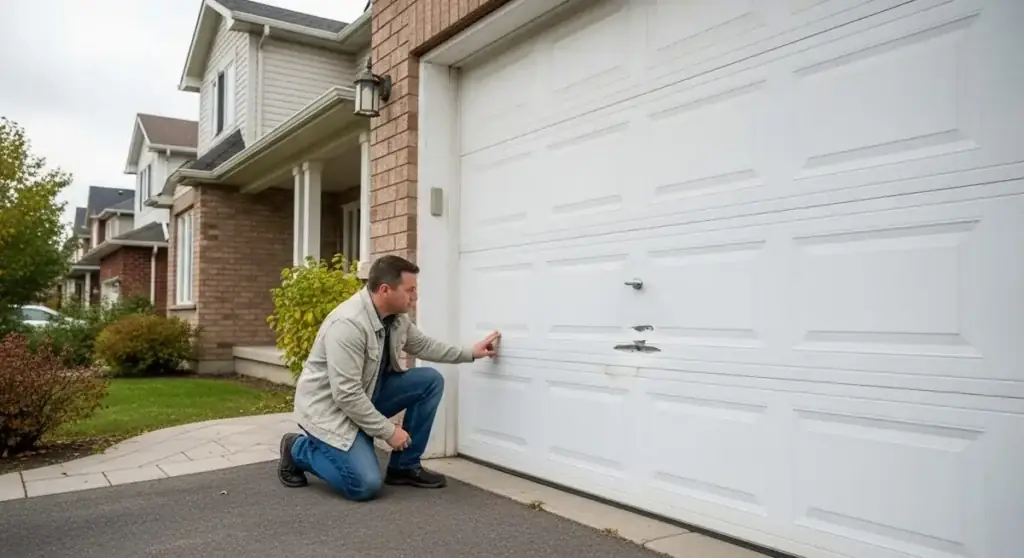
Residences with young children often utilize paved garage aprons for basketball, hockey, or cycling. Standard uninsulated single-skin steel doors suffer frequent panel dents from stray balls and bicycle handlebars. Repeated minor impacts crease metal sections, ruining exterior home appearance.
Installing a polyurethane sandwich door equipped with stucco-embossed skins absorbs ball impacts effectively. Rigid foam backing prevents outer metal skins from flexing beyond elastic limits. Stucco surface embossing diffuses light reflections, masking micro-scratches from daily play activities.
Tight Interior Parking Constraints
Attached single-car garages offer tight spatial clearances for modern trucks and full-size SUVs. Drivers parking in dimly lit garage bays risk bumping front license plate brackets or trailer hitches against closed door panels. Vehicle bumper contact creates horizontal creases across lower door sections.
Positioning floor-mounted heavy rubber parking chocks establishes a physical stop barrier on concrete slabs. Installing ceiling-mounted laser parking guides assists drivers in positioning vehicles accurately. Laser dots project onto dashboard reference points, stopping vehicle movement before bumpers touch lower door sections.
Severe Weather and Airborne Debris Exposure
Coastal regions experience seasonal windstorms carrying flying branches, yard debris, and large hail. Unreinforced steel panels flex under wind pressure cycles, while hail strikes leave localized dent patterns across smooth metal faces.
Specifying heavy-gauge steel sandwich doors reinforced with horizontal U-bar struts prevents wind pressure deformation. Thick steel skins resist hail indentations, while internal polyurethane cores dampen dynamic panel vibration during high winds.
Planning, Cost, and Resource Dynamics How to Avoid Garage Doors Panel Dent Risks
Financial Allocation for Impact Mitigation
Mitigating panel dent risks requires evaluating initial door material expenses alongside long-term section repair costs. Single-skin steel doors carry lower purchase prices initially, but repairing dented sections requires purchasing replacement panels and paying professional installation labor.
Upgrading to polyurethane sandwich construction increases initial equipment spending. However, dense foam cores prevent dent damage from daily household use, extending overall section lifespans beyond thin single-layer steel alternatives.
Cost and Protection Performance Ranges
Tools, Strategies, and Support Systems
Physical Safeguards and Diagnostic Equipment
Preventing panel damage relies on physical spatial barriers, vehicle alignment tools, and protective hardware accessories:
Rubber Parking Chocks
Heavy rubber chocks bolted directly to concrete floor slabs establish permanent physical stops for vehicle tires.
Laser Parking Alignment Systems
Ceiling-mounted motion-activated lasers project targeting dots onto vehicle dashboards, guiding precise parking depths.
Sports Safety Netting
Free-standing or retractable mesh netting installed across driveway aprons captures stray basketballs before they hit metal door panels.
Wall-Mounted Bumper Guards
Soft rubber bumper strips mounted along interior garage side walls prevent car doors from denting when opened inside tight bays.
High-Density Polyurethane Cores
Injected foam cores provide continuous internal support behind metal panel faces, absorbing kinetic impact energy.
Stucco Surface Emboss Patterns
Textured steel skin finishes diffuse direct sunlight reflections, concealing micro-scratches and minor surface imperfections.
Risk Landscape and Failure Modes How to Avoid Garage Doors Panel Dent Risks
Primary Panel Breakdown Patterns
Failing to plan spatial clearances, material thickness, or vehicle stop barriers introduces panel damage failure points.
Lower Section Vehicle Creasing
Drivers pulling into garage bays over-ride foot brakes, tapping lower door sections with vehicle license plate frames. Unbacked steel panel sections crease horizontally, binding vertical roller movement inside side tracks.
Middle Section Sports Impact Denting
High-velocity basketball or baseball impacts strike middle section panels, causing localized metal stretching. Stretched metal creates shallow concave dents that ruin exterior door profiles.
Key Degradation Risk Factors
-
Unbacked Single-Skin Steel Flex: Thin sheet metal flexes under low impact forces, leaving permanent surface creases.
-
Loose Floor Chock Anchor Fasteners: Unanchored parking stops shift position, allowing vehicles to over-travel towards closed doors.
-
Dark Solar Heat Panel Warping: Dark painted panel skins absorb solar radiation, increasing surface metal temperature and accelerating foam delamination risks.
Governance, Maintenance, and Long-Term Adaptation
System Inspection Protocols
Maintaining panel protection integrity requires periodic spatial audits, hardware inspections, and preventative maintenance schedules:
Quarterly Environmental Audits
-
Inspect floor-mounted rubber parking chocks for loose anchor bolts or shifting positions.
-
Test laser parking alignment guides to confirm accurate sensor projection angles.
-
Check sports safety netting for frayed mesh strands or loose support poles.
Bi-Annual Hardware Inspections
-
Inspect panel section faces for minor surface scratches; apply touch-up paint to prevent rust formation.
-
Verify vertical track alignment; ensure horizontal U-bar reinforcement struts remain securely bolted.
-
Clean exterior panel surfaces using mild detergent to remove corrosive road salt residue.
Measurement, Tracking, and Evaluation
Structural Performance Signals
Evaluating panel protection measures involves monitoring physical alignment indicators and material surface conditions.
Leading Protection Signals
-
Floor Chock Position Stability: Securely anchored tire stops maintain fixed vehicle parking clearances.
-
Panel Surface Elasticity: Intact polyurethane sandwich cores resist flex under moderate hand pressure.
-
Laser Projection Accuracy: Properly calibrated laser guides position vehicles twelve inches clear of closed door panels.
Lagging Damage Signals
-
Horizontal Panel Creasing: Visible creases along section edges indicate vehicle bumper contact.
-
Roller Track Binding: Squealing side rollers signal track misalignment caused by dented panel sections.
-
Surface Paint Chipping: Flaking exterior paint along metal creases exposes steel skins to rapid environmental rusting.
Common Misconceptions and Oversimplifications How to Avoid Garage Doors Panel Dent Risks
“Thicker Paint Prevents Garage Door Dents”
Exterior paint coatings protect steel skins against corrosion and atmospheric weathering. However, paint layers add zero structural yield strength, failing to prevent metal stretching under kinetic impacts.
“Single-Skin Steel Doors Are Durable Enough for Active Driveways”
Uninsulated single-skin steel panels flex easily under light physical contact. Active driveways used for sports or frequent vehicle parking demand polyurethane sandwich panels or composite overlays to resist daily impact risks.
“Paintless Dent Repair Works on All Metal Garage Panels”
Automotive paintless dent repair techniques pop out shallow dents on heavy curved auto body steel. However, thin stamped garage door steel stretches permanently under impact, making complete dent removal difficult on flat panel faces.
Ethical, Practical, and Architectural Considerations
Unifying Facade Appearance and Durable Material Science
Garage doors dominate exterior residential elevations. Preventing panel dent damage requires balancing visual architectural choices with durable material selection.
Architects use specific design strategies to blend impact-resistant doors into residential facades gracefully:
-
Stucco and Grain Textures: Selecting embossed woodgrain or stucco panel textures diffuses light reflections, masking minor surface wear naturally.
-
Composite Carriage House Overlays: Installing composite trim overlays across insulated steel shells provides traditional visual character while resisting mechanical denting.
-
Dark Panel Surface Temperature Control: Specifying heat-reflective paint finishes on dark door panels reduces solar heat absorption, preventing metal expansion stress.
Conclusion
Understanding how to avoid garage doors panel dent risks requires an integrated strategy combining durable material selection, spatial clearance controls, and physical site barriers. Treating garage doors as vulnerable structural surfaces protects building facade aesthetics and extends door operating lifespans.
Specifying high-density polyurethane sandwich panels, stucco-embossed steel skins, and synthetic composite overlays provides passive resistance against kinetic impacts. Installing rubber floor parking stops, laser alignment guides, and sports safety netting establishes effective spatial buffer zones. Thorough planning, physical site safeguards, and regular hardware maintenance keep garage openings dent-free, protecting property values across decades of daily family use.