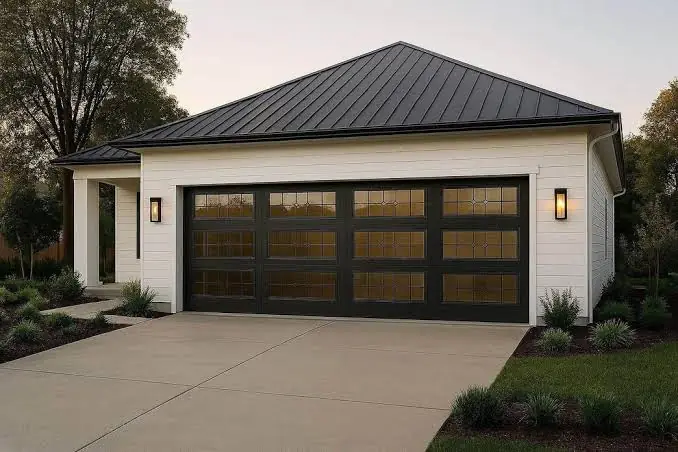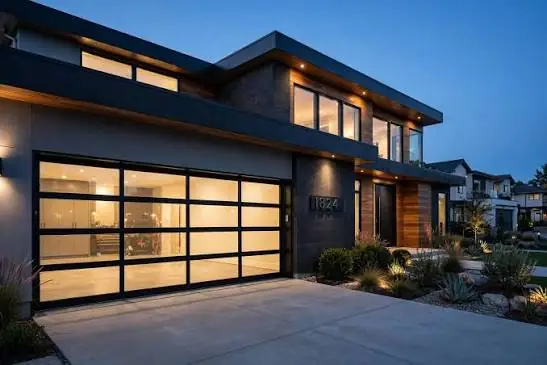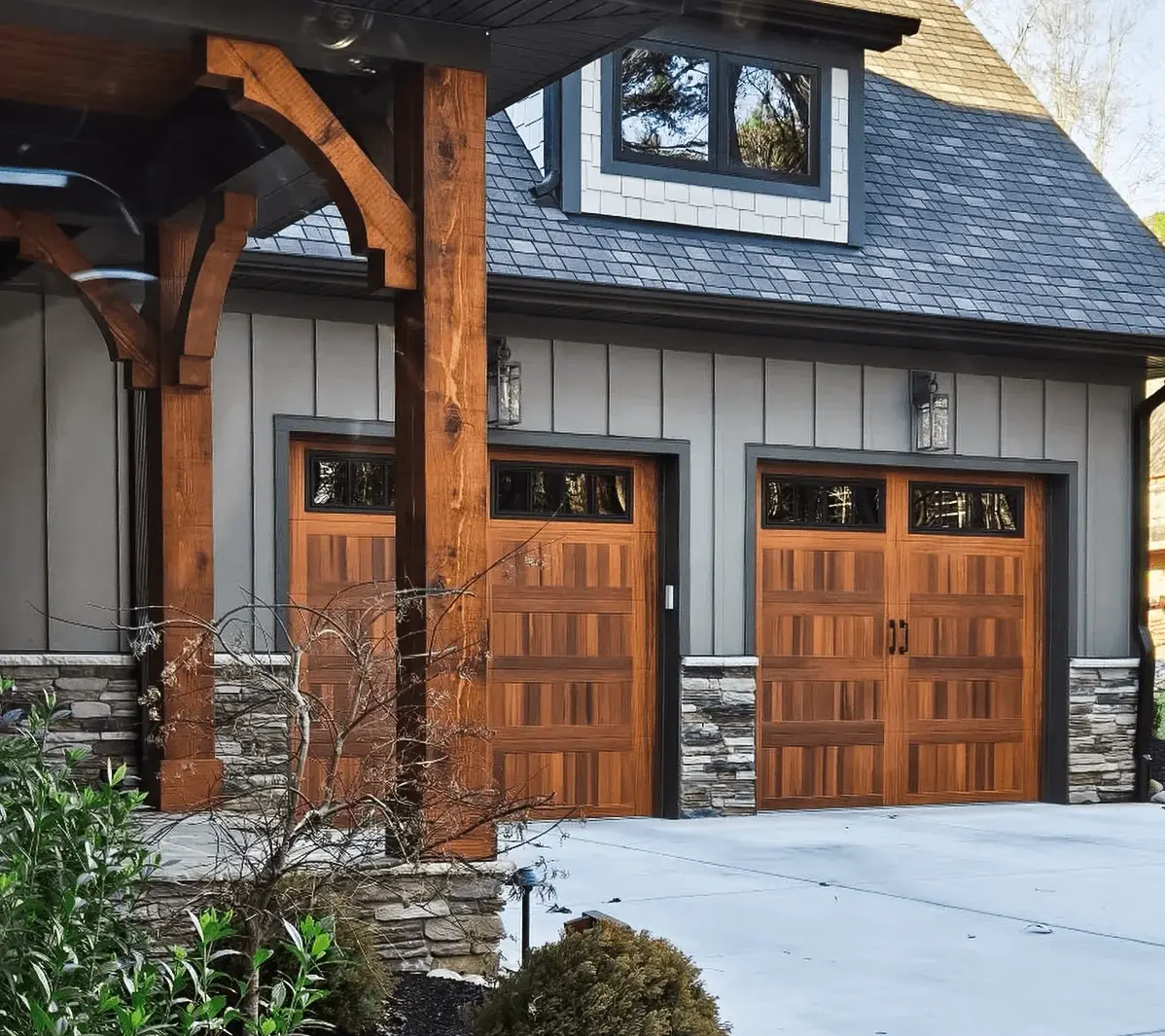
Top Wooden Garage Doors in America: Species, Craftsmanship, and Architectural Design
Natural wood portals occupy a unique position in American residential architecture. Unlike mass-produced steel or synthetic composite alternatives, timber garage doors function as organic structural features along primary building facades. Top Wooden Garage Doors in America. A double-car wood garage door presents roughly 150 square feet of continuous natural timber texture, defining the visual character of high-end homes.
Integrating heavy natural timber portals into residential building envelopes requires balancing aesthetic architectural design with rigorous wood physics. Wood absorbs and releases moisture constantly in response to shifting ambient humidity levels. Unmanaged dimensional movement causes panel swelling, joint displacement, finish failure, and mechanical binding inside side tracks.
Achieving long-term structural reliability demands an advanced material specification strategy. Specifying premium timber portals involves evaluating wood species cellular density, natural rot resistance, structural frame joinery, high-torque counterbalance springs, and breathable exterior finishes. Neglecting environmental wood physics leads to rapid finish breakdown, timber warping, and early structural degradation across daily operating seasons.
Top Wooden Garage Doors in America
Scope of Premium Timber Portal Selection
Understanding top wooden garage doors in america requires evaluating raw timber species alongside custom millwork construction techniques. The phrase refers to identifying architectural overhead wood doors engineered to deliver high structural stability, superior natural rot resistance, refined joinery details, and long-term facade beauty.
Achieving genuine architectural value demands evaluating raw wood cell structures together with internal frame construction. Solid timber assemblies must accommodate natural wood expansion without breaking perimeter weather seals or over-stressing mechanical track hardware.
Common Misconceptions Regarding Wood Portals
A frequent misunderstanding involves assuming all wood species react identically to outdoor weather exposure. Specifying untreated softwoods like standard pine or white fir near damp ocean environments leads to rapid moisture absorption, internal rot, and insect infestation within a few operating seasons.
Another common error involves assuming heavy timber doors perform reliably when mounted on standard residential overhead tracking hardware. Heavy solid hardwood sections place intense dynamic forces on track rollers, hinges, and torsion balance springs.
Oversimplification and Material Selection Risks
Focusing strictly on surface grain aesthetics while ignoring internal structural frame joinery creates severe long-term stability risks. Fastening exterior wood cladding over light interior frames allows moisture to collect inside unsealed panel cavities, triggering hidden rot.
Similarly, applying heavy impermeable polyurethane varnishes over wet timber seals moisture inside wood cells. Trapped moisture expands under hot summer solar rays, causing exterior clear coats to blister and peel away. Complete architectural specification requires matching premium wood species with open-grain breathable finishes, heavy 12-gauge steel tracks, and high-cycle torsion springs.
Evolution of Architectural Timber Portals in Residential Construction
The Transition from Carriage Houses to Sectional Overhead Doors
Early 20th-century American estates featured detached carriage houses equipped with heavy out-swinging double timber doors. Master carpenters crafted these early portals from old-growth white pine, cypress, or Douglas fir using traditional mortise-and-tenon joinery. While visually distinctive, outward-swinging doors required wide driveway clearance and provided minimal resistance against severe weather drafts.
Post-WWII suburban expansion popularized sectional overhead track doors to maximize driveway space. Early mass-market sectional doors utilized thin plywood panels held by lightweight pine frames. While affordable, uninsulated plywood panels absorbed rain, creating heavy structural sagging over continuous lift cycles.
Technological Advancements in Engineered Wood Systems
During the late 20th century, architectural millwork factories developed advanced kiln-drying techniques and moisture-resistant structural adhesives. Injected polyurethane insulated cores were integrated between exterior wood cladding and interior backing panels, improving thermal resistance dramatically.
Modern timber portal engineering incorporates acetylated wood technology alongside custom CNC joinery. Chemical acetylation alters wood cell structures permanently, producing non-toxic timber assemblies that resist moisture absorption, rot, and dimensional movement across extreme American microclimates.
Material Selection and Structural Evaluation Frameworks
The Whole-Panel Dimensional Stability Model
Evaluating natural wood portal performance requires structured analytical frameworks. The Whole-Panel Dimensional Stability Model measures timber performance across three distinct operational layers:
Structural Operational Layers
-
Cellular Core Layer: Wood species specific gravity, grain orientation, volumetric shrinkage coefficient, and kiln-drying moisture content.
-
Structural Frame Layer: Frame joinery design, internal steel reinforcement, polyurethane insulation core density, and floating panel allowances.
-
Surface Barrier Layer: Protective oil-based stains, breathable micro-porous sealants, perimeter EPDM weather-stripping, and top header draft flaps.
Applying this analytical model prevents over-indexing on visual wood grain while identifying hidden dimensional movement risks.
The Environmental Resistance Index
This framework evaluates natural wood longevity by measuring species rot resistance, insect deterrence, and natural extractives content. Species rich in natural tannic acids and heartwood extractives resist moisture decay without requiring heavy chemical preservatives.
Primary Wood Species and Fabrication Typologies Top Wooden Garage Doors in America
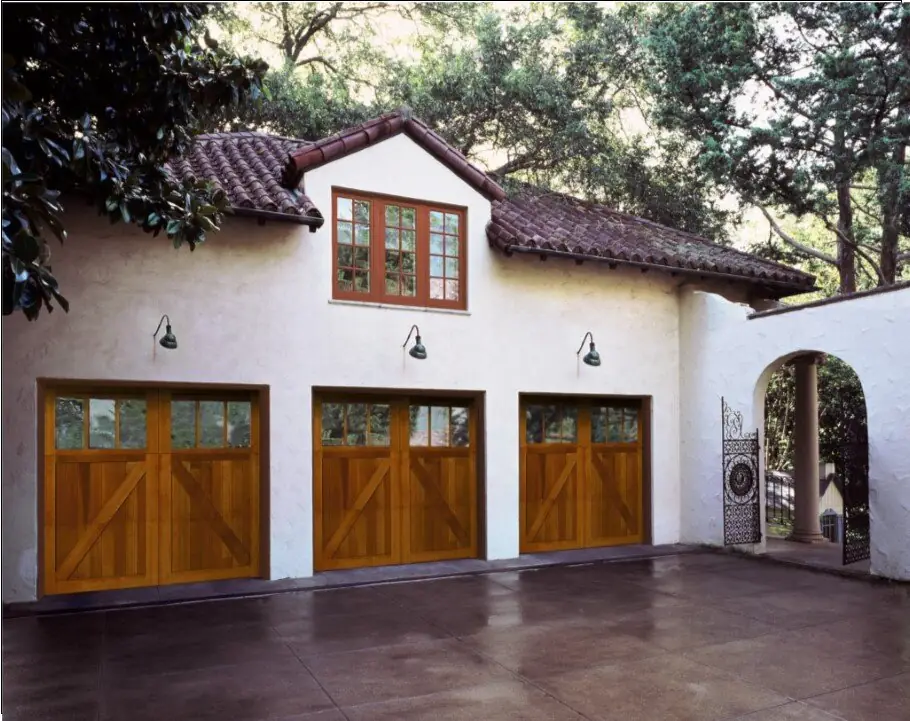
Western Red Cedar Assemblies
Western Red Cedar represents a premier wood choice for American residential garage portals. Cedar features low cellular density, delivering natural thermal insulation alongside exceptional dimensional stability under changing weather conditions.
High natural thujaplicin content endows Western Red Cedar heartwood with innate resistance to rot, decay, and insect damage. Cedar accepts semi-transparent stains and protective clear oils easily, making it ideal for rustic or modern architectural designs.
Genuine Mahogany and Sapele Formations
Genuine African Sapele and Central American Mahogany offer dense hardwood options for luxury residential estates. Deep reddish-brown grain patterns provide rich visual warmth and high mechanical impact strength.
Mahogany exhibits low volumetric shrinkage, resisting warping and twisting when exposed to intense summer solar heat. High timber density requires heavy-duty torsion springs and commercial-grade operator drives to balance dynamic section weight.
Accoya Acetylated Timber Engineering
Accoya wood represents a major leap forward in sustainable timber portal engineering. Sustainably sourced softwoods undergo non-toxic acetylation processing, converting hydroxyl groups inside wood cells into stable acetyl groups.
Chemical modification reduces water absorption by over 80 percent, rendering Accoya virtually immune to swelling, shrinking, warping, and fungal decay. Accoya doors accept dark architectural finishes without risk of heat-induced timber movement.
Comparative Timber Species and Performance Matrix
Evaluating timber portal options requires comparing physical material parameters directly across performance metrics.
Structural Counterbalance Integration and Heavy Load Paths
Headroom Clearance and High-Lift Track Geometry
Custom solid wood garage portals weigh significantly more than hollow steel doors, requiring reinforced tracking hardware. Standard residential tracks curve horizontally right above door headers, placing heavy wood sections overhead.
High-lift track configurations extend vertical tracks higher up interior wall faces before curving overhead. Full-vertical lift tracks push door sections straight up structural walls, keeping heavy timber mass aligned closer to load-bearing wall studs.
Torsion Spring Engineering and Wall Anchor Kinetics
Heavy natural wood panels place intense dynamic forces on counterbalance assemblies. Technicians must calculate custom torsion spring wire diameters, coil lengths, and drum sizes to balance solid wood section weight smoothly.
Mounting brackets must attach directly to solid structural wall framing using heavy 3/8-inch lag screws. Secure wall anchorage prevents track deflection under heavy panel loads, preserving smooth door travel and tight weather seal alignment.
Regional Microclimates and Environmental Adaptation Top Wooden Garage Doors in America
Sub-Zero Northern Climate Operations
Homes in northern states face severe freezing temperatures, heavy snowfall, and road salt moisture. Freezing humidity collects inside unsealed lower timber joints, causing wood fibers to split during freeze-thaw cycles.
Sub-zero installations require kiln-dried Western Red Cedar or Accoya timber paired with multi-vane EPDM bottom seals. Coating lower panel edges with water-repellent end-sealers stops ground moisture absorption completely.
High-Humidity Coastal Environments
Coastal structures experience continuous salt air aerosols, intense ultraviolet radiation, and sudden tropical windstorms. High ambient moisture accelerates timber swelling, while salt crystals scratch exterior protective finishes.
Oceanfront installations perform exceptionally well using Accoya or Genuine Mahogany held by 316-grade stainless steel hinges and tracking hardware. Applying breathable marine-grade finish systems shields wood fibers from salt spray degradation.
Financial Dynamics, Custom Craftsmanship, and Ownership Value
Upgrading to luxury real wood garage portals requires initial capital, but high architectural curb appeal enhances long-term property equity. The table below outlines investment ranges across timber portal categories.
Investing in premium timber portals lowers long-term replacement frequency while protecting interior garage spaces from weather intrusion.
Protective Finishes, Marine Sealants, and Surface Preservation
Penetrating Exterior Oils versus Surface Film Coats
Protecting exterior timber portals requires specifying breathable finish chemistry. Film-forming varnishes create hard plastic surfaces over wood grain, trapping internal moisture that causes bubbling and flaking.
Penetrating oil finishes absorb deep into wood cell walls, repelling liquid water while allowing water vapor to escape. Penetrating oils enhance natural wood grain figures without cracking or peeling under solar heat exposure.
Micro-Porous UV Inhibitors and Pigment Particles
Sunlight ultraviolet rays break down natural lignin binders inside raw wood fibers, turning un-stained timber gray. Adding semi-transparent iron oxide pigments to exterior oil finishes blocks harmful solar ultraviolet radiation.
Micro-porous finishes contain specialized UV absorbers that prevent solar wood degradation, extending finish service lifespans between maintenance re-application cycles.
Failure Landscapes and Environmental Degradation Risks
End-Grain Moisture Absorption and Joint Rot
End-grain wood pores act like natural sponges, absorbing liquid water rapidly through capillary action. When lower door panel stiles sit in standing puddle water, unsealed end-grain fibers draw moisture upward into panel frames.
High internal moisture triggers fungal rot, weakening structural joint stiles out of sight. Sealing all cut end-grains with heavy epoxy sealers before assembly prevents capillary water draw.
Panel Bowing and Track Binding
Sunlight heating one side of an uninsulated wood door causes exterior timber face fibers to dry and shrink faster than interior face fibers. Asymmetrical moisture loss causes panels to bow outward like a bowstring.
Bowed wood panels force side rollers to jam inside track channels, stalling electric operators. Installing horizontal steel angle struts along interior panel stiles prevents heat-induced panel bowing.
Governance, Maintenance Protocols, and Long-Term Adaptation
Sustaining premium wood portal beauty demands routine inspection schedules to preserve timber finishes and structural hardware.
Annual Timber Maintenance Checklist
-
Finish Integrity Audit: Inspect exterior panel faces for finish thinning, wood graying, or micro-cracks; reapply penetrating oil coats as needed.
-
End-Grain Moisture Check: Inspect lower panel edges for soft wood spots or finish flaking caused by ground water splash.
-
Track & Roller Inspection: Lubricate commercial nylon roller bearings and check side tracks for smooth clearance.
-
Torsion Counterbalance Check: Test manual door balance; have certified technicians adjust spring tension if heavy timber panels drag.
Proactive finish upkeep prevents deep wood cell damage, keeping custom timber doors visually striking across decades of use.
Performance Monitoring Signals and Diagnostic Metrics Top Wooden Garage Doors in America
Evaluating wood door health involves monitoring physical material condition and mechanical hardware signals continuously over time.
Leading vs. Lagging Performance Indicators
Leading indicators signal emerging timber issues before structural failure occurs. Minor finish dulness, fine surface checks, slight roller noise, and minor track drag indicate maintenance needs that require simple oil re-coating or adjustment.
Lagging indicators document severe material breakdown after damage happens. Soft rotting wood, deeply bowed panels, cracked corner mortise joints, and snapped torsion cables confirm advanced system failure. Tracking leading indicators allows property owners to preserve wood surfaces before expensive structural damage occurs.
Common Misconceptions and Specifying Oversimplifications
Myth 1: Wood Garage Doors Always Warps and Rots Quickly
Many homeowners assume all wood garage doors warp and rot within a few operational seasons. Specifying kiln-dried Western Red Cedar, Mahogany, or Accoya timber paired with penetrating oils eliminates dimensional warping and decay risks. Properly specified wood doors provide decades of reliable service.
Myth 2: Synthetic Composite Doors Perfectly Replicate Real Wood
Assuming synthetic composite overlays match real timber beauty completely is a common oversimplification. Synthetic composites offer low maintenance, but lack the natural grain depth, rich color variations, and authentic tactile warmth of genuine hardwood millwork.
Strategic Synthesis for Premium Timber Building Envelopes
Selecting top wooden garage doors in america requires combining premium rot-resistant wood species, custom joinery, breathable exterior finishes, and heavy-duty counterbalance tracking hardware. Treating custom timber portals as essential architectural investments preserves building energy performance and elevates residential estate beauty.
Complete Architectural Specification Checklist
-
Wood Species Selection: Specify kiln-dried Western Red Cedar, Genuine Sapele Mahogany, or Accoya acetylated wood.
-
Frame Architecture: Demand mortise-and-tenon structural framing with floating panel inserts and insulated polyurethane cores.
-
Protective Finish Chemistry: Order penetrating exterior oils with micro-porous UV absorbers; avoid film-forming lacquers.
-
Hardware & Tracking Package: Install 12-gauge galvanized steel tracks paired with sealed 13-ball-bearing nylon rollers.
-
Counterbalance Engineering: Size commercial-grade torsion springs rated for high operational duty cycles to lift heavy wood mass smoothly.
-
Perimeter Weather Defense: Fit heavy dual-vane EPDM jamb gaskets and sealed bottom threshold shoes to block drafts.
Systematic timber selection, custom millwork engineering, and routine maintenance turn custom wood garage portals into safe, highly durable, and visually breathtaking architectural assets for modern American homes.